
Glucagon-like peptide-1 (GLP-1) agonists, such as semaglutide (also known as Ozempic or Wegovy, depending on your country of residence) and tirzepatide (Mounjaro), have captured the public attention due to their effects on weight loss, with terms like ‘ozempic face’ trending on social media.
Although these medications are widely discussed for their weight loss and metabolic benefits, GLP-1 drugs also have fascinating effects on the brain. Not only do they regulate appetite and satiety, but they may also influence cognition, memory, and even neurodegenerative processes.
This article will explore the science behind GLP-1 agonists and, most importantly, explain how they act on the brain.
How is blood sugar regulated?
Our bodies rely on glucose as a primary fuel source, and the concentration of glucose in the bloodstream is kept within a narrow range by hormones secreted by pancreatic cells:
- Beta (β) cells secrete insulin in response to rising plasma glucose, such as after a meal. Insulin facilitates glucose uptake into muscle and fat tissue for energy or storage. At the same time, it suppresses glucose production in the liver.
- Alpha (α) cells secrete glucagon, which has the opposite effect. When blood sugar drops, such as during fasting or exercise, glucagon prompts the liver to break down glycogen and synthesise new glucose, ensuring organs have a steady supply.
- Other hormones and peptides provide additional fine-tuning. For example, amylin slows slows the movement of food through the stomach and curbs post-meal glucose spikes, while GLP-1 also enhances glucose-stimulated insulin secretion and decreases glucagon release.

How does this relate to type 2 diabetes?
In type 2 diabetes, the balance between insulin and glucagon is disrupted on multiple levels:
- Insulin resistance: In muscle, fat, and liver cells, the normal response to insulin is blunted. Glucose transport into tissues is impaired, so sugar lingers in the bloodstream instead of being used for energy. In the liver, insulin’s ability to suppress glucose production is reduced, leading to inappropriate glucose release even when blood sugar is already high.
- β-cell dysfunction: Early in the disease, pancreatic β-cells try to compensate for insulin resistance by producing more insulin. Over time, however, the cells lose their ability to secrete enough insulin to keep blood sugar in check.
- Glucagon dysregulation: Pancreatic α-cells often release glucagon inappropriately, even when blood sugar is elevated.
What are glucagon-like peptide-1 receptor agonists?
Glucagon-like peptide-1 is a hormone naturally released in the small intestine in response to food. GLP-1 enhances glucose-dependent insulin secretion, suppresses inappropriate glucagon, and slows food movement through the stomach, moderating the rate at which glucose enters the bloodstream.
GLP-1, however, is rapidly degraded by enzymes, giving it a half-life of only a few minutes. This limitation led to the development of GLP-1 receptor agonists, which have transformed the management of type 2 diabetes. These drugs are structurally modified to resist degradation and provide sustained physiological effects.

Beyond blood sugar regulation, GLP-1, and therefore GLP-1 agonists, also act on the central nervous system to promote satiety and reduce food intake.
How does the brain regulate appetite?
Hunger and satiety are regulated by a network of hormones and neural circuits that maintain energy balance. Two key hormones play primary roles: ghrelin, often called the “hunger hormone,” and leptin, known as the “satiety hormone.” Ghrelin, produced by the stomach, sends a direct signal to the brain indicating the need to eat, while leptin, secreted by fat cells, communicates fullness and suppresses appetite.
During weight loss, ghrelin levels rise and leptin levels fall, promoting increased food intake to restore energy balance. In the brain, these signals converge in the arcuate nucleus of the hypothalamus. Here, leptin inhibits appetite-stimulating neuropeptides while promoting the release of appetite-suppressing molecules. Ghrelin has the opposite action and stimulates eating.
How do GLP-1 drugs influence appetite?
In type 2 diabetes and obesity, hypothalamic neurons often become leptin-resistant, meaning that even high circulating leptin fails to suppress hunger effectively. GLP-1 receptor activation in the arcuate nucleus can enhance leptin signalling and inhibit ghrelin signalling, promoting satiety and reducing food intake.

GLP-1 drugs also bind to receptors in the nucleus tractus solitarius of the brainstem which promotes a feeling of fullness by enhancing serotonergic activity.
Beyond this homeostatic regulation, appetite is also influenced by the brain’s reward circuitry, particularly the ventral tegmental area and nucleus accumbens, where dopamine signalling drives the motivational aspects of eating. GLP-1 receptor activation in these regions reduces the rewarding value of calorie-dense foods.
In addition to its effects on the brain, GLP-1 also slows the movement of food through the stomach by stimulating the vagus nerve. As a result, food remains in the stomach longer, creating a sense of fullness that naturally helps reduce calorie intake.
Unfortunately, a less desired effect of GLP-1 agonists is nausea, caused by activation of GLP-1 receptors in the area postrema, a region of the brain also known as the ‘vomiting centre’.
Beyond appetite regulation
GLP-1 agonists influence the brain in ways that extend beyond appetite and glucose control:
- Cognitive function: GLP-1 receptors are expressed in regions involved in learning and memory, such as the hippocampus, where activation can enhance synaptic plasticity and cognitive function.
- Neuroprotection: Studies suggest GLP-1 agonists may have neuroprotective effects, including reducing inflammation, oxidative stress, and neuronal cell death.
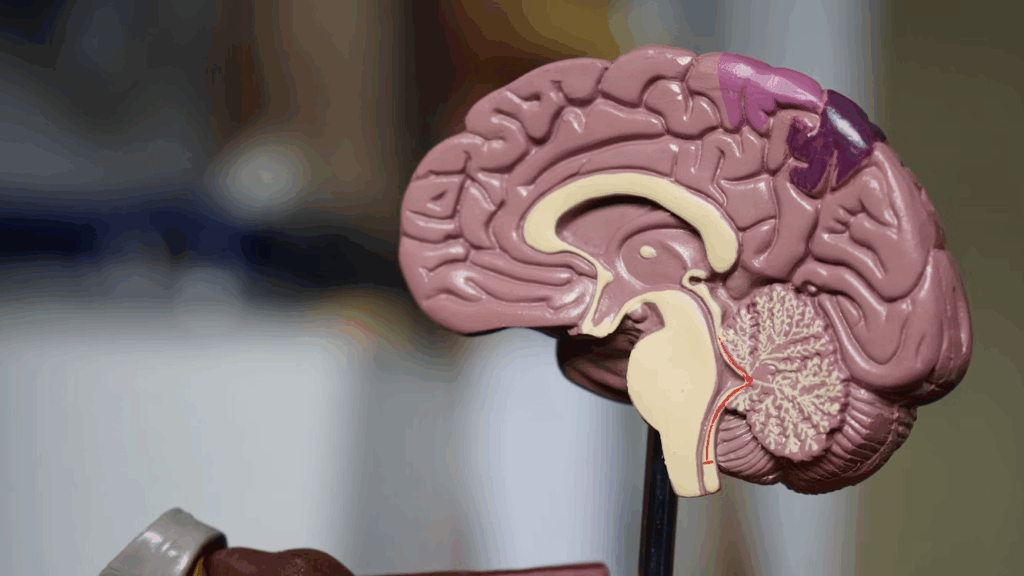
Alzheimer’s disease & type 2 diabetes
Type 2 diabetes has been recognised as a significant risk factor for Alzheimer’s disease, the most common form of dementia. In fact, Alzheimer’s disease is sometimes even referred to as ‘type 3 diabetes‘. Insulin resistance can affect glucose metabolism in the brain, leading to neuronal loss, inflammation, and increased accumulation of the toxic proteins amyloid-β and tau, key features of Alzheimer’s disease.
Epidemiological studies suggest that Metformin, a drug commonly used to treat type 2 diabetes, can be protective against Alzheimer’s disease, likely due to its ability to improve insulin sensitivity and reduce chronic inflammation. Researchers have also reported improved cognitive performance in people with diabetes taking metformin.
Similarly, emerging evidence points to potential benefits of GLP-1 receptor agonists in neurodegenerative conditions like Alzheimer’s disease by enhancing insulin signalling in the brain, reducing neuroinflammation, and improving neuronal energy metabolism.
Mental health & addiction
GLP-1 receptor agonists also appear to influence mental health. Research indicates that these drugs can lower alcohol, nicotine, and stimulant consumption by modulating dopamine in the brain’s reward pathways. Their impact on mood and anxiety, however, is less clear, with some studies linking GLP-1 drugs to mood disturbances, while others suggest potential benefits.
Limitations
While GLP-1 drugs show promising effects on brain health, cognition, and neurodegenerative disease pathways, clinical evidence is mixed. More long-term research is needed to establish therapeutic efficacy for neurological conditions.
Conclusion
Beyond hormonal and appetite regulation, GLP-1 agonists show promise in supporting neuroprotection, enhancing cognitive function, and potentially slowing the progression of conditions such as Alzheimer’s disease. As research continues, these therapies may offer a unique bridge between managing metabolic disease and promoting long-term brain health.
Frequently Asked Questions (FAQ)
How do GLP-1 drugs affect the brain?
GLP-1 receptor agonists, originally developed for type 2 diabetes, act on receptors in the brain that regulate appetite, reward pathways, and cognitive processes. Research suggests they may influence memory and even promote neuroprotection.
What are the potential mental health side effects of GLP-1 drugs?
Despite reports of mood disturbances, limited research suggests that GLP-1 drugs may actually have beneficial effects on mental health.
References
Giorgi, et al (2025). An analysis on the role of glucagon-like peptide-1 receptor agonists in cognitive and mental health disorders. Nature Mental Health. doi:https://doi.org/10.1038/s44220-025-00390-x
Hong, et al (2024). Role of glucagon-like peptide-1 receptor agonists in Alzheimer’s disease and Parkinson’s disease. Journal of Biomedical Science, 31(1). doi:https://doi.org/10.1186/s12929-024-01090-x
Moiz, et al (2025). Mechanisms of GLP-1 receptor agonist-induced weight loss: A review of central and peripheral pathways in appetite and energy regulation. The American Journal of Medicine, 138(6). doi:https://doi.org/10.1016/j.amjmed.2025.01.021
Trapp & Brierley (2021). Brain GLP‐1 and the regulation of food intake: GLP‐1 action in the brain and its implications for GLP‐1 receptor agonists in obesity treatment. British Journal of Pharmacology, 179(4), pp.557–570. doi:https://doi.org/10.1111/bph.15638
Zheng, et al (2024). Glucagon-like peptide-1 receptor: Mechanisms and Advances in Therapy. Signal Transduction and Targeted Therapy, 9(1), pp.1–29. doi:https://doi.org/10.1038/s41392-024-01931-z